

Rapid die casting is a manufacturing approach that combines fast tooling decisions, suitable alloy selection, and process-ready part design to move metal components from drawing to production in compressed timelines.
For engineering teams and sourcing managers under schedule pressure, this process comes with both advantages and extra pressure on early engineering decisions. This blog will be dedicated to the discussion of the efficiency of rapid die casting, and how a qualified manufacturer can help you achieve better project outcomes.
What Makes Rapid Die Casting Fast
Rapid die casting shortens total production time through a combination of fast fill cycles, near-net-shape output, and the ability to form complex geometry in a single shot. The biggest advantage comes when the process, tooling strategy, and production volume are matched correctly from the beginning.
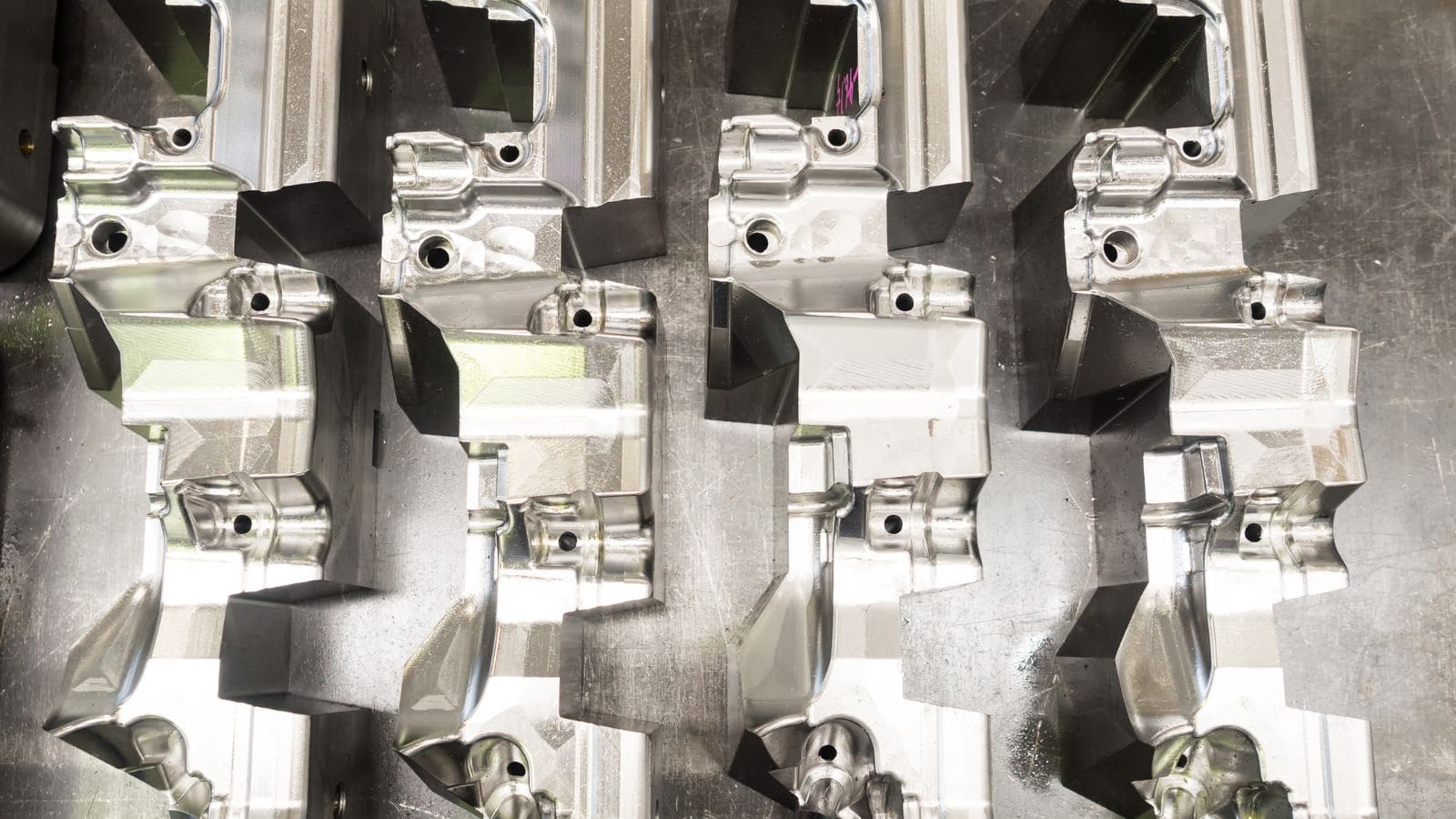
How the Die Casting Process Shortens Cycle Time
Rapid die casting shortens total production time through a combination of key process advantages:
- Fast Fill Cycles: Molten metal is forced into a hardened steel die under high pressure, filling the cavity in a fraction of a second.
- Near-Net-Shape Output: Walls, bosses, ribs, and external features are formed in one operation, heavily reducing downstream machining steps.
- Minimal Downtime: The metal cools quickly, the part is ejected, and the machine resets immediately for the next highly repeatable shot.
- Economy of Scale: Once demand moves into the hundreds or thousands, the upfront tooling investment is rapidly offset by lower labor input and higher output rates.
When Rapid Casting Beats CNC Machining
CNC machining remains the better choice for very low quantities, highly specialized internal features, or parts made from materials that cannot be cast. But for metal components with complex external geometry, thin walls, and repeatable production demand, rapid die casting typically delivers lower cost per part and significantly higher output rates.
The cost crossover point varies by part size and complexity, but die casting often becomes more competitive once demand moves into the hundreds or low thousands of parts. At that stage, the upfront tooling investment is offset by faster production, lower labor input, and better part-to-part consistency.
Where Rapid Prototyping, 3D Printing, and Vacuum Casting Still Fit
Rapid prototyping methods such as 3D printing and vacuum casting are useful during early product development, especially for checking geometry, assembly fit, and visual appearance. They help teams make design decisions before committing to hard tooling.
The limitation is that prototype methods do not fully replicate the wall behavior, mechanical properties, or surface condition of a true die cast metal part. For teams that need production-representative samples, rapid tooling is often a better bridge between concept validation and scaled manufacturing.
Why Tooling and DFM Decisions Matter Early
Tooling and DFM decisions set the ceiling for speed, dimensional consistency, and part quality. Many delays blamed on production are actually caused by issues that should have been resolved before machining begins.
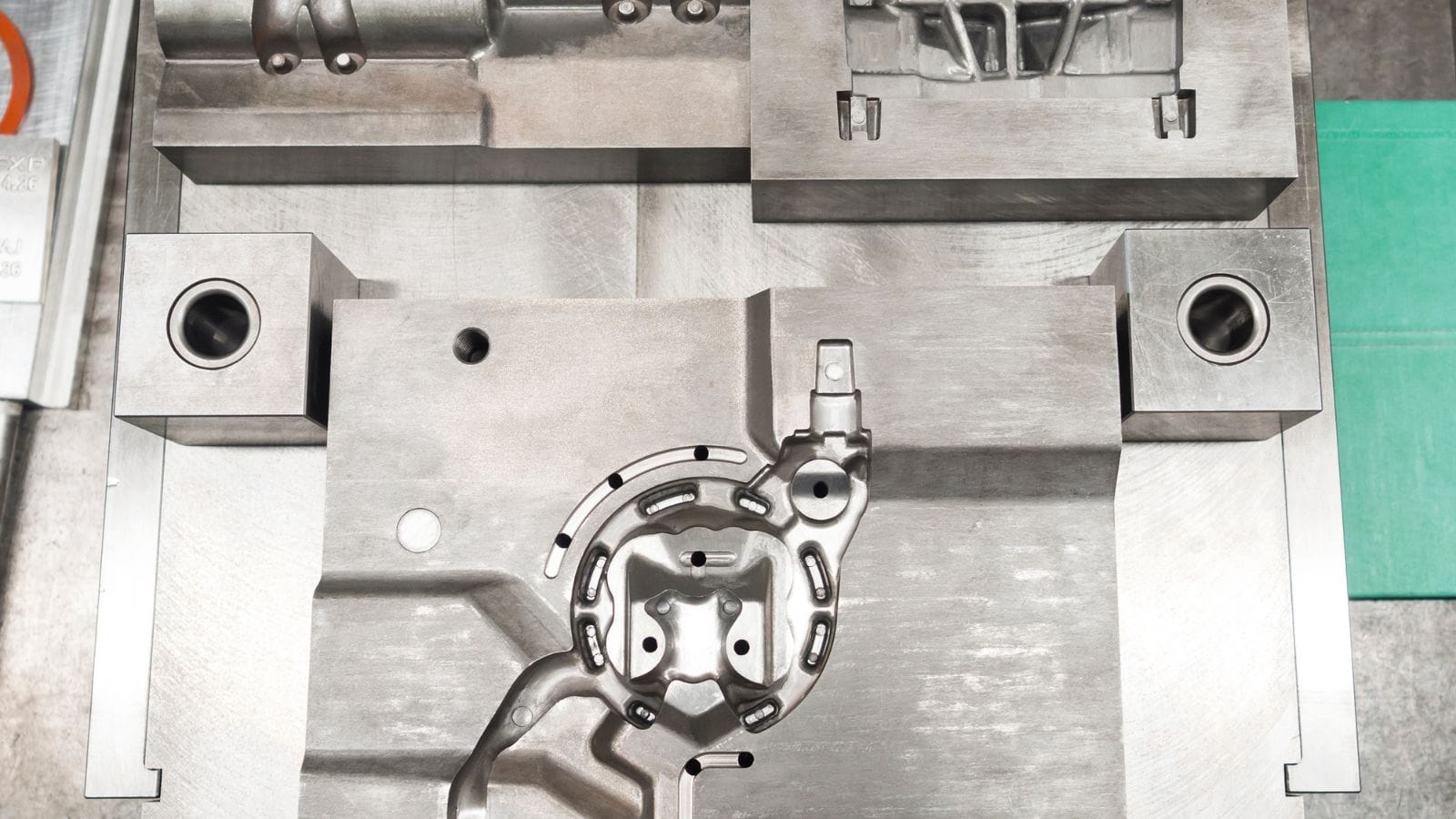
How Die Casting Mold Design Affects Speed and Part Quality
The die is responsible for every part in the production run, so poor engineering at the tooling stage quickly shows up in cycle time, scrap rate, and dimensional variation.
Cooling layout, venting strategy, gating design, and ejection all influence how reliably the process runs once sampling begins.
Good mold design helps the metal fill evenly, cool consistently, and release cleanly. That improves surface quality, reduces porosity risk, and shortens the amount of adjustment needed after the first trial.
Key DFM Priorities Before Mold Manufacturing
To ensure stable processes and avoid tooling delays, DFM reviews should focus on these critical design points:
- Draft Angles: Must be applied to vertical walls to support clean, rapid part release from the mold.
- Wall Thickness: Keep within a practical range. Walls that are too thin resist filling; walls that are too thick increase cycle times and shrink-defect risks.
- Undercuts: Minimize where possible. Slides and lifters add tooling complexity, cost, and potential failure points.
- Corners & Features: Avoid sharp internal corners. Ensure ribs, gussets, and bosses are correctly sized in proportion to surrounding wall sections.
Production Tooling vs. Low-Volume Tooling
In rapid die casting, your tooling strategy is the biggest lever for controlling time-to-market. While full production tooling and softer, low-volume tooling differ greatly, making the right choice ensures you don’t sacrifice speed for unnecessary tool life. The best path depends on your expected volume, launch timing, and whether the program is likely to scale immediately after validation:
| Tooling Type | Material Example | Upfront Cost & Lead Time | Durability & Lifecycle | Best Fit For |
|---|---|---|---|---|
| Full Production Tooling | H13 Tool Steel | Higher investment, longer lead time | Excellent durability, stable long-term consistency | Long production runs, established designs, mass production |
| Low-Volume (Soft) Tooling | Softer alloys / Pre-hardened steel | Lower initial cost, shorter lead time | Reduced tool life, less stability over time | Pre-production validation, low-volume programs |
Materials and Alloys for Rapid Die Casting
Rapid die casting is built around non-ferrous alloys, with aluminum, zinc, and magnesium covering most production applications. Each material family supports a different balance of weight, strength, detail, corrosion resistance, and finishing performance.
Aluminum Alloys for Lightweight Structural Parts
Aluminum die casting is widely used for housings, brackets, heat sinks, and automotive components because it offers a strong balance of weight reduction, corrosion resistance, and thermal performance.
A380 is often the default starting point because it provides a practical mix of castability, machinability, and mechanical strength. A360 offers better corrosion resistance and slightly improved ductility, while A413 is often selected for thinner walls and more complex geometries where fluidity becomes more important.
ADC12 is also common in electronics and automotive applications where dimensional consistency and machinability are priorities.
Zinc Alloys for Thin Walls and Fine Detail
Zinc die casting alloys run at lower temperatures than aluminum, which supports faster cycle times and lower thermal stress on tooling. That combination makes zinc attractive for high-detail parts, long tool life, and tighter production tolerances.
Zamak 3 is the standard choice for many commercial programs because of its dimensional stability, smooth as-cast finish, and good plating compatibility. Zamak 5 adds copper for improved strength and hardness, making it useful where slightly higher mechanical performance is required.
Zinc is especially effective for thin-wall parts, smaller precision components, and parts that require decorative or protective plating.
Magnesium Alloys for Weight-Critical Applications
Magnesium alloys are the lightest structural die casting materials used in production, making them relevant for automotive, electronics, and other applications where mass reduction is a key design goal.
AZ91D is the most common grade thanks to its established balance of castability, corrosion resistance, and strength. AM60B and AM50 are more suitable when improved ductility or impact performance matters.
Compared with aluminum and zinc, magnesium requires more careful melt handling and tighter process control, but it offers clear advantages when lightweighting is a primary requirement.
Typical Applications for Rapid Die Casting
Rapid die casting is the go-to solution for components that require repeatable geometry at production volumes. Common applications include:
- Electronic Housings: Enclosures that need thin walls, EMI shielding, or specific cosmetic finishes.
- Automotive Brackets: Structural components requiring high strength-to-weight ratios.
- Structural Covers: Rigid protective casings for industrial or consumer equipment.
- Heat-Dissipation Components: Heat sinks where material thermal conductivity is critical.
- Industrial Hardware: Mechanical parts requiring high durability and dimensional consistency.
When to Choose Rapid Die Casting
In many cases, the strongest fit is not just the part shape itself, but the production context around it. Rapid die casting is especially useful under the following conditions:
- Cost-Restricted Complexity: When a part combines a relatively complex external form with cost pressures that make full CNC machining too expensive or slow.
- Scaling Up: When teams need a metal part that can move efficiently from early prototype validation directly into scalable manufacturing.
- Demand for Repeatability: When consistent quality is mandatory across medium to high-volume production runs.
Moldie: Your Trusted Rapid Die Casting Service Provider
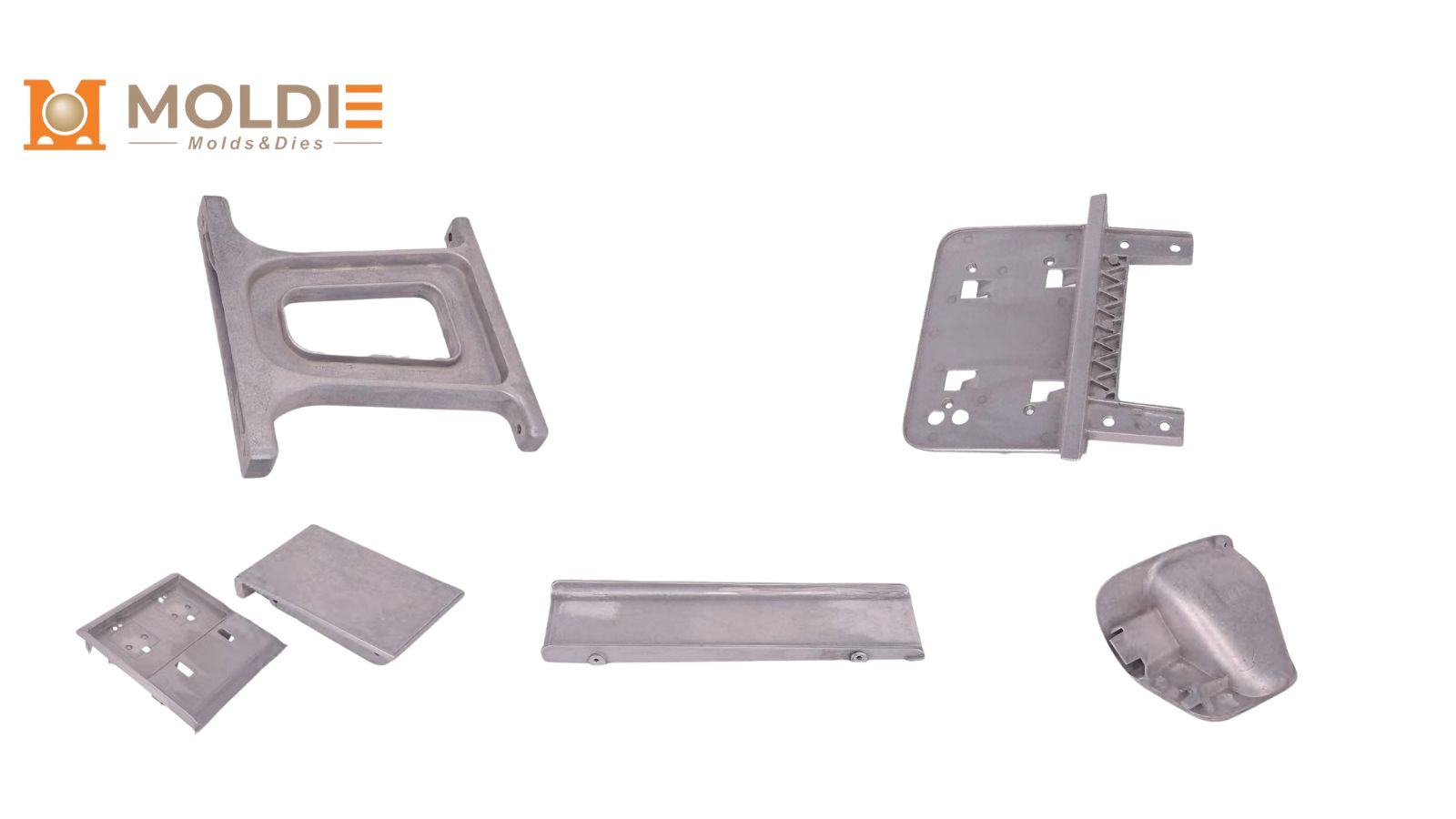
Quality rapid die casting service is backed by tooling strategy, DFM discipline, alloy selection, and production planning that align from the start. If you’re under schedule pressure and need production-representative die cast parts, our team at Moldie can help you validate feasibility early and move from drawing to scalable production.
Send us your part details for a fast review:
- 3D file/2D drawing (STEP/IGES + PDF)
- Target alloy (or performance requirements if undecided)
- Estimated annual volume and launch timeline
- Critical-to-quality dimensions and surface finishing requirements
If you’re comparing options, you can also explore our official website for aluminum die casting, zinc die casting, and magnesium die casting capabilities for application-specific guidance.