


Low volume die casting occupies a very specific corner of metal manufacturing. It is neither the cheapest nor designed to compete with high-volume production economics. What it offers is production-quality metal parts, in real alloys, made with real molds, before a program has the volume to justify a full production die.
For manufacturing engineers and sourcing managers, that distinction matters. In this blog, we will dissect this topic and explore how low volume die casting benefits your production program.
How Low-volume Die Casting Differs from the General Practice
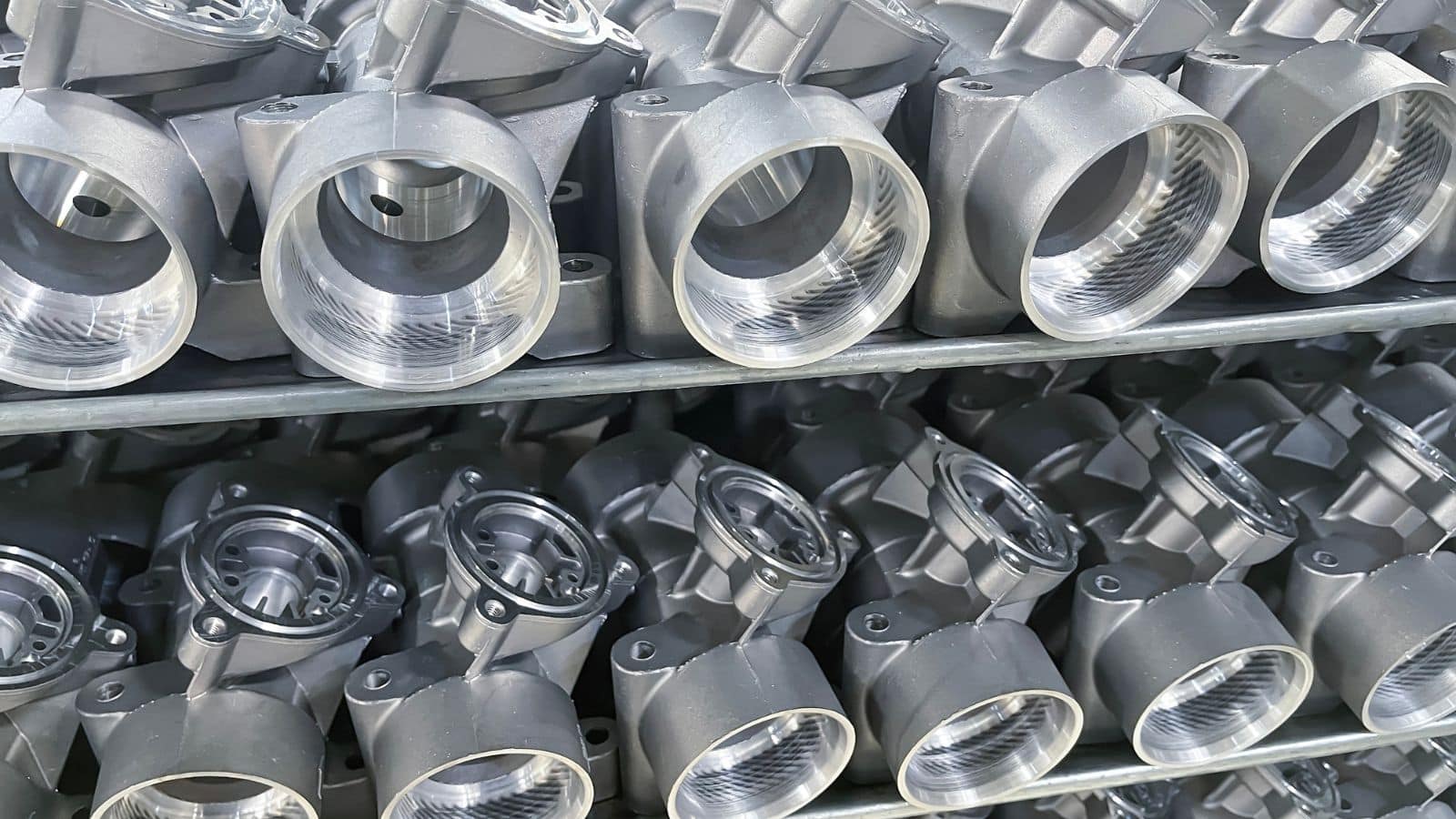
The low-volume die casting process is mostly similar to the general die casting process, but goal here is to minimize upfront costs and lead times, even if it means a slightly longer cycle time per part. In order to achieve this, some special mold design decisions must be made:
- Cavity count: Single-cavity molds are common. They reduce the upfront machining cost of the die and make it much easier to modify the mold.
- Gating and runner design for manual trimming: Low-volume molds optimize gating for first-shot fill success and easy manual/CNC trimming and post-casting removal, since short runs cannot justify the cost of an automated trim die.
- Simplified cooling channel layout: Without the demand for the lowest cycle time possible, low-volume tools can use simpler, straight-line cooling. This accelerates the mold-building process and further reduces costs.
- Ejection system focused on safety, not speed: Rather than complex layouts designed for robotic extraction, ejection in this metal casting process prioritizes part safety to prevent distortion during removal, often accommodating manual or semi-automated part handling.
- Tooling Material (P20/Aluminum vs. H13): High-volume dies use expensive H13 steel to withstand millions of shots. Low-volume programs typically use P20 steel or aluminum.
We will revisit some of these concepts in the later chapter about tooling costs.
When Low-Volume Programs Make Sense
Low-volume die casting is a deliberate production strategy for programs where high-volume mold investment cannot be justified yet.
Typical Quantity Ranges and Applications
Low volume die casting generally covers runs from roughly 50 units to around 10,000 units, depending on the supplier and tooling strategy. Below 50 parts, machined billets or 3D-printed metal prototypes are often more practical. Above 10,000, production mold economics start to outpace the flexibility benefits of a low volume approach. Here, we will list some major applications:
- Development and pre-production builds where engineers need cast parts that match production material and geometry
- Specialty and industrial equipment built in hundreds, not thousands, where the part complexity rules out machining
- Service and replacement part production for older programs with ongoing but modest demand
- Market validation builds before committing to full production investment
Bridge Production Between Prototype And Scale-Up
Bridge production sits between a validated prototype and a committed production run. The mold used at this stage, sometimes called bridge tooling or soft tooling, is designed to produce parts that are equivalent to production parts without the full cost of production steel.
A well-planned bridge program allows teams to validate the die casting process, refine secondary operations, and build initial inventory before a production die is cut.
First Article Inspection (FAI) is a very effective risk-mitigation technique for such a program. A reliable supplier will use CMM and 3D scanning to compare the bridge trial shots directly against your CAD model. If a wall shrinks unexpectedly or a feature warps, the engineering team catches it on the inexpensive bridge mold.
Materials, Alloys, And Part Performance
Alloy selection in low volume die casting influences castability, surface finish, secondary machining behavior, and the physical properties of the finished part.
Here is a quick reference guide to the three primary material groups:
Low Volume Mold Manufacturing, Costs, and Lead Times
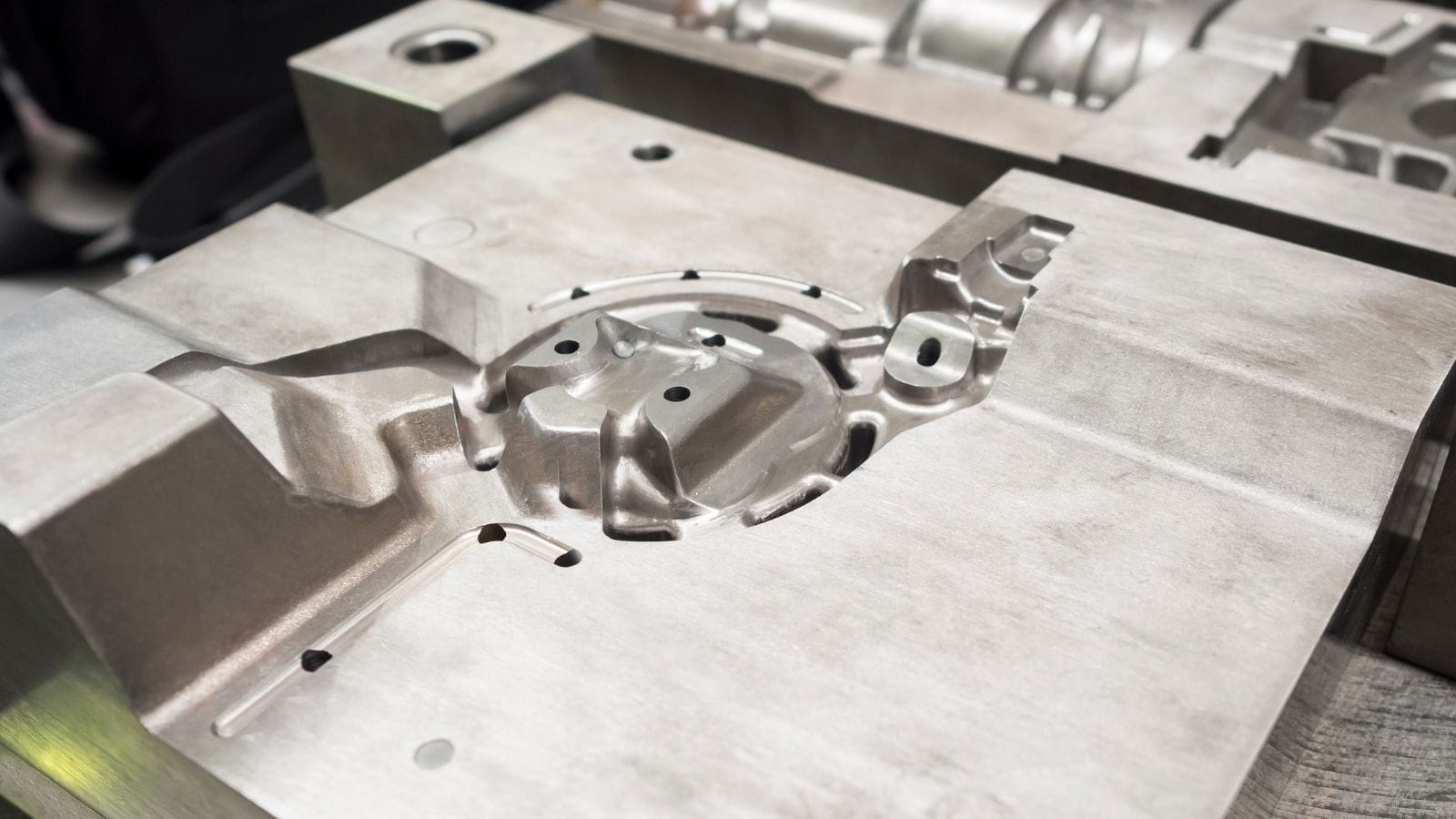
Tooling cost is the largest expense in a low-volume die casting program, and it determines whether the economics work. The right strategy depends on target volume, expected design changes, and the tolerance requirements of the program.
How Tool Material Affects Upfront Tooling Investment
The steel grade used for the die determines tool life, cost, and resistance to thermal fatigue. Three grades of tool steel cover most programs:
| Material Grade | Typical Tool Life | Best Use Case |
|---|---|---|
| Aluminum | 1,000-5,000 shots | Early bridge builds, rapid prototyping |
| P20 steel | 10,000-50,000 shots | Low-volume to medium-volume programs |
| H13 tool steel | 100,000+ shots | Production mold, high-volume transition |
A common misconception is that “soft tooling” (aluminum or P20 steel) produces parts with loose tolerances. In reality, the primary difference between a soft tool and an H13 production die is mold life, not precision. For the first few thousand shots, a well-designed low-volume mold easily holds standard die casting linear tolerances (±0.1 to ±0.2 mm).
Single-Cavity Low Volume Mold and Modular Approaches
Single-cavity molds are the standard starting point for low-volume programs. They are faster to build, cheaper to repair, and easier to modify between runs.
For parts that could eventually move to higher volumes, designing the low-volume mold with future cavity inserts in mind avoids rebuilding the complete die frame later.
Modular mold design takes this further by using interchangeable inserts within a common die base. A shared base with multiple insert sets allows a manufacturer to cast several related part numbers from one holder, spreading the base cost across multiple programs.
This approach works well for product families or assemblies with shared geometry.
What Shapes Unit Cost And Delivery Speed
Unit cost and lead times in low-volume die casting require a completely different approach than high-volume production. To keep economics favorable, engineers use a “reversed strategy” to balance mold complexity and secondary operations:
- Tooling Amortization is the Dominant Cost: At low volumes, the upfront mold cost dictates the per-part price. For example, a $15,000 mold amortized over 500 parts adds $30 to each part in tooling costs alone, before adding material or machine time.
- Keep Molds Simple, Use More CNC: High-volume molds use expensive slides and lifters to eliminate secondary operations. Low-volume programs do the opposite. To minimize upfront costs, the die is kept simple. Features like undercuts, side-pulls, or high-precision bores are intentionally left to secondary CNC machining.
- Skip the Trim Dies: Short runs cannot justify automated trim dies. Gate removal and flash trimming are done via manual routing or standard CNC. Paying for a bit more machine time across 500 parts is drastically cheaper than adding complex mechanical actions to the mold.
- Faster Lead Times: Keeping the mold simple ensures faster delivery. Low-volume molds typically run 3 to 6 weeks from drawing approval to first shot. Simpler P20 molds hit the shorter end, while adding complexity will extend the timeline.
Comparing Low-Volume Die Casting to Alternative Processes
Understanding where low-volume die casting fits against competing manufacturing methods helps you avoid investing in the wrong process.
Low Volume Die Casting vs. CNC Machining
While CNC machining from a solid billet is excellent for simple, ultra-low-volume prototypes, its economics break down quickly as volume and complexity increase.
- Cost of complexity: For parts with internal coring, thin-wall sections, or complex exterior curves, die casting is significantly more cost-efficient.
- Material waste: Machining wastes massive amounts of material and expensive machine time to remove metal. Die casting produces a near-net-shape part in seconds.
- Material density: Machining produces a structurally dense part with zero porosity, which is its primary advantage over casting.
Low Volume Die Casting vs. Sheet Metal Fabrication
Fabricated assemblies, such as welded sheet metal housings or brackets, can match the overall geometry of a cast part, but they fall short in consistency.
- Single operation vs. Assembly: Die casting consolidates multiple features into a single piece, eliminating the need for welding, riveting, or complex assembly steps.
- Repeatability: Die casting delivers superior dimensional repeatability across hundreds of parts compared to manual or robotic welding.
- Surface quality: A cast part provides a uniform, seamless cosmetic surface that is difficult to achieve with welded joints.
Low Volume Die Casting vs. Sand Casting
Sand casting is often the go-to process for ultra-low volumes (1 to 50 parts) or extremely large components, because it requires almost zero permanent tooling investment.
- Tooling costs: Sand casting wins on initial pattern cost, but loses on per-part cost as volumes move into the hundreds.
- Surface finish: Sand casting produces a rough, textured surface. Die casting provides a much smoother finish that is often ready for painting or plating.
- Tolerances: Sand cast parts have very loose tolerances and usually require heavy post-machining. Die casting easily hits tight tolerances right out of the mold.
Low Volume Die Casting vs. Investment Casting
Investment casting (lost-wax casting) produces excellent surface detail and can process exotic materials like stainless steel and titanium, which die casting cannot.
- Material suitability: If your part must be steel, choose investment casting. If it is aluminum, zinc, or magnesium, die casting is the better route.
- Cycle time and unit cost: The investment casting process is notoriously slow and labor-intensive. For aluminum/zinc programs above a few hundred units, die casting is far more economical.
Low Volume Die Casting vs. 3D Printing
Metal and resin 3D printing are perfect for rapid geometry validation, but they are not true proxies for a production manufacturing process.
- Mechanical properties: A 3D-printed metal part does not replicate the grain structure or the exact mechanical behavior of a part formed under high-pressure die casting.
- The right workflow: Smart engineering teams use 3D printing upstream to verify assembly fit and identify interference issues. Once the design is locked, they transition to low-volume die casting for functional testing and bridge production.
Moldie: Your Trusted Low Volume / Prototype Die Casting Service Provider
Moving from low volume production to full-scale operation doesn’t have to require a massive upfront investment. At Moldie, we manufacture low-volume and prototype die casting molds and parts with an in-house engineering team and die casting production machines, helping you reduce financial risk and accelerate time-to-market
Ready to evaluate your projects? Visit our website to request a competitive quote today!