


Pressure die casting is a manufacturing process that injects molten non-ferrous metal into a steel mold under high or low pressure. Once cooled, the part is ejected as a near-net-shape component ready for use or further finishing.
The main appeal is simple: complex metal parts in seconds, with consistent quality and minimal waste. For engineers and procurement teams weighing production options, this combination of speed and precision is often the deciding factor.
That said, the process has tradeoffs. Tooling costs are significant upfront, and not every alloy or part geometry is suitable. This guide covers the process variations, material options, common applications, and practical considerations to help you evaluate whether pressure die casting fits your project.
How the Pressure Die Casting Works
Pressure die casting uses a two-part steel mold—one stationary half and one moving half—mounted in a casting machine. The mold cavity is machined to match the desired part shape. Molten metal is forced into this cavity under pressure, held briefly to solidify, then ejected.
The machine has two key systems:
-
Injection system – drives molten metal into the mold
-
Clamping system – keeps the mold halves closed under high pressure during injection
Cycle times are short—often just seconds from injection to ejection—which makes the process highly productive for medium and high volumes.
High pressure Die Casting vs. Low Pressure Die Casting
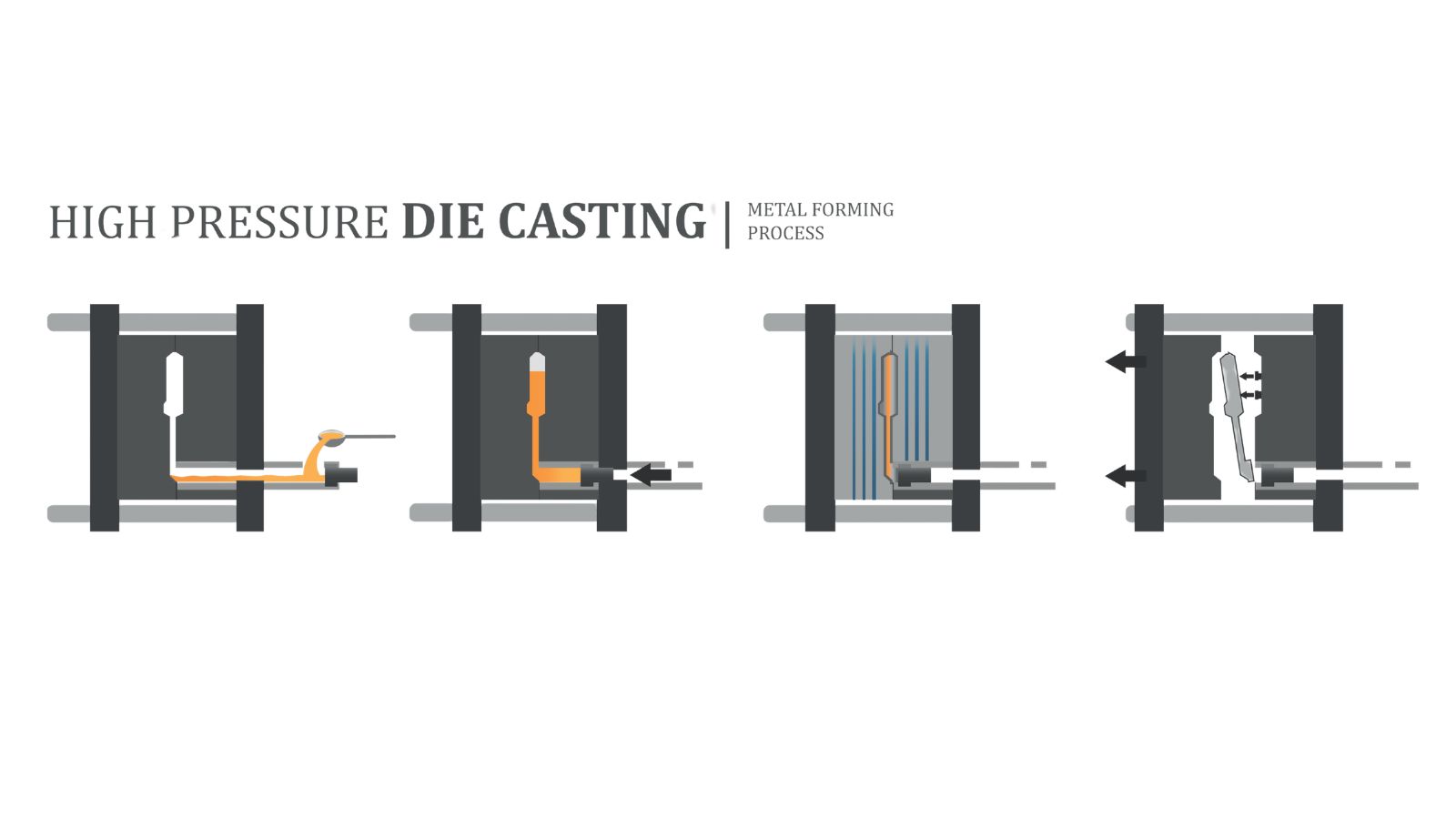
High-pressure die casting (HPDC) operates at 1,500–25,400 psi, filling the mold in milliseconds. It delivers tight tolerances, smooth surfaces, and fast cycles, making it the standard choice for high-volume aluminum, zinc, and magnesium parts. The main drawback is the risk of trapped air, which can cause porosity.
Low-pressure die casting (LPDC) uses 2–15 psi, filling the mold more slowly and gently. This reduces turbulence and porosity, producing parts with better internal integrity. It is often used for structural components like automotive wheels, though cycle times are longer.
Hot Chamber Die Casting vs. Cold Chamber Die Casting
The choice between hot and cold chamber machines depends on the alloy’s melting point:
-
Hot chamber – The injection mechanism sits in the molten metal. Fast cycles, minimal oxidation. Works with zinc, magnesium, and other low-melting alloys. Not suitable for aluminum because it attacks the steel components.
-
Cold chamber – Metal is melted in a separate furnace, then ladled into the injection sleeve. This setup handles aluminum, copper, and other high-melting alloys. The extra ladling step adds time, but it is the only practical method for these materials.
Most aluminum die casting production runs on cold chamber machines.
Common Materials in Pressure Die Casting Process
| Die Casting with Different Materials | Common Grades | Key Traits |
|---|---|---|
| Aluminum pressure die casting | A380, ADC12, A360 | Lightweight, corrosion-resistant, good thermal conductivity |
| Zinc pressure die casting | Zamak 3, Zamak 5 | Excellent detail, smooth finish, long tool life |
| Magnesium pressure die casting | AZ91D, AM60 | Highest strength-to-weight ratio, good for thin walls |
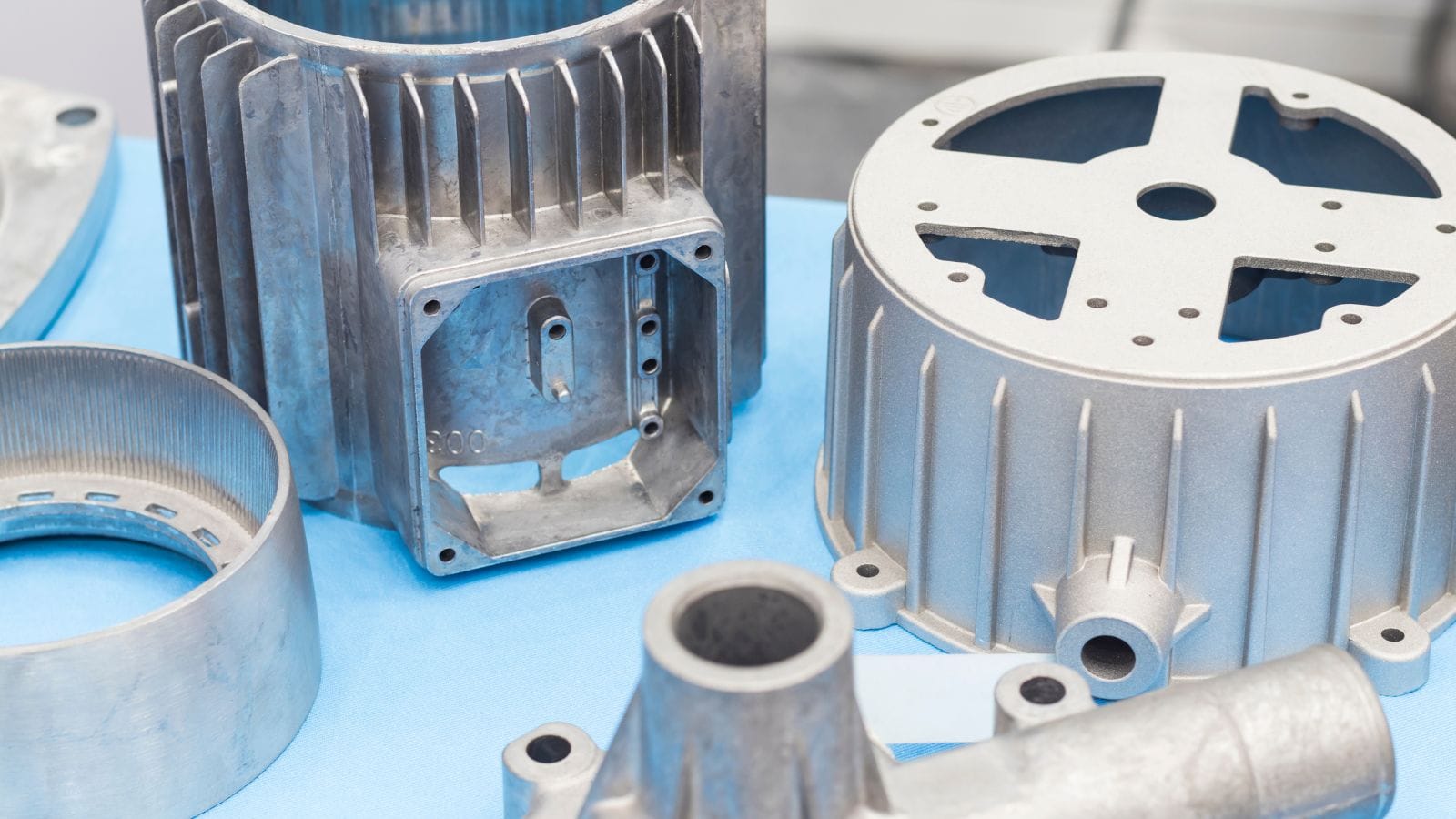
Aluminum pressure die casting is the most widely used technique due to its balance of strength, castability, and cost. Meanwhile, zinc excels in small, intricate parts where surface detail matters, and magnesium is chosen when weight reduction is the top priority.
Typical Applications for Pressure Die Casting
| Industry | Common Parts |
|---|---|
| Automotive | Engine blocks, transmission housings, brackets |
| Consumer electronics | Device frames, heat sinks, connectors |
| Aerospace | Structural brackets, housings |
| Industrial | Pump housings, valve bodies, motor housings |
| General | Hardware, appliance components, decorative parts |
Pressure Die Casting Mold Design and Basics
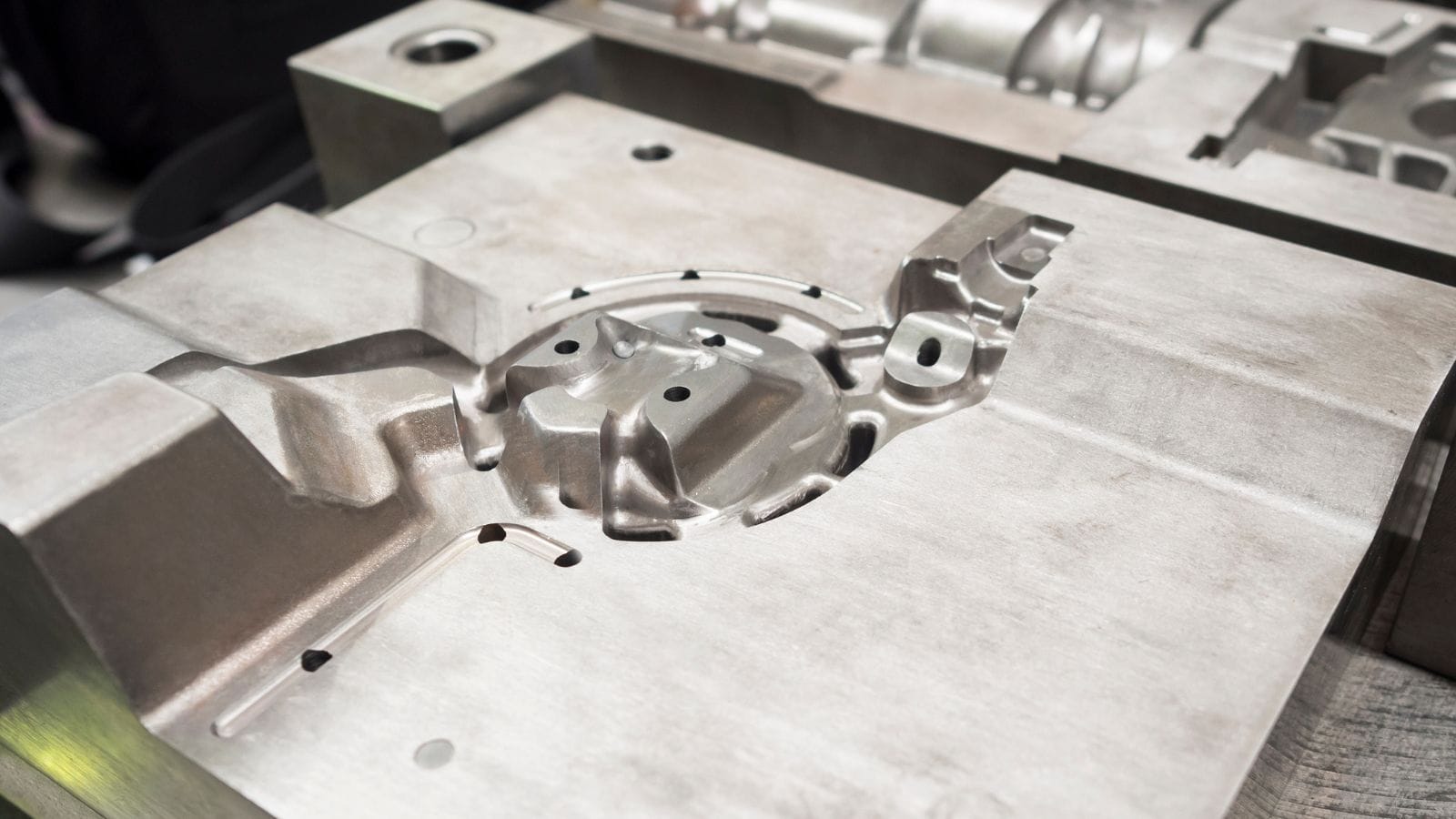
The mold (or die) is typically machined from H13 tool steel. Several design factors affect quality and cost:
-
Wall thickness – HPDC can produce walls as thin as 1–2 mm. Uniform thickness is important to avoid shrinkage and warping. Abrupt changes in wall thickness create flow problems and cooling issues.
-
Gating and runners – The system that directs metal into the cavity. Gate location and size control fill velocity and flow pattern. Poor gating leads to cold shuts and incomplete fills.
-
Venting – Air in the cavity must escape. Proper vent paths prevent gas porosity. Overflow wells at the end of the flow path capture the first metal, which carries most of the trapped air.
-
Draft angles – Slight tapers on vertical walls help the part release cleanly from the mold.
Mold flow simulation is used during design to predict fill behavior and identify problems before steel is cut.
Common Defects and Solutions in Pressure Die Casting
| Defect | Cause | Typical Fix |
|---|---|---|
| Porosity | Trapped air or uneven solidification | Improve venting, adjust cooling rate |
| Cold shuts | Metal fronts meet without fusing | Increase temperature, modify gating |
| Misruns | Metal solidifies before cavity is full | Raise pour temperature, adjust fill speed |
| Flash | Metal escapes at parting line | Increase clamping force, check mold alignment |
Most defects trace back to process parameters or tooling conditions, and they tend to repeat cycle after cycle. Identifying the root cause quickly is key to keeping scrap rates low.
Cost and Volume Economics in Pressure Die Casting
Tooling for pressure die casting can cost anywhere from several thousand to tens of thousands of dollars, depending on part complexity and cavity count. This cost is fixed regardless of how many parts you produce.
At low volumes, the per-part tooling cost is high—sand casting or gravity casting may be more economical.
At volumes of 5,000+ parts per year, HPDC becomes competitive.
At 50,000+ parts per year, it is usually the lowest-cost option for aluminum and zinc parts with good dimensional requirements.
Cycle time is the main driver of piece-part cost once the tooling is in place. Faster cycles mean more parts per shift. Multi-cavity dies can further reduce cost per part but increase tooling complexity and upfront expense.
Questions to Ask a Die Casting Supplier
Before committing to a tooling investment, consider asking:
-
What mold flow simulation tools do you use, and will you share the report?
-
What tool steel grade is specified, and what die life do you guarantee?
-
What inspection and reporting do you provide at first article and during production?
-
Are secondary operations (machining, finishing, assembly) done in-house or outsourced?
-
What is the lead time from design approval to first production parts?
Suppliers who manage the full process—from mold design to finished parts—generally offer better consistency than those who cast only and hand off secondary work to external vendors.
Ready to See If Pressure Die Casting Fits Your Project?
Pressure die casting delivers speed, precision, and cost efficiency at volume. It handles complex geometries across aluminum, zinc, and magnesium alloys—but upfront tooling costs and process control require careful planning.
If your application demands moderate to high volumes, tight tolerances, and non-ferrous materials, this process is hard to beat.
Send your quote to our engineering team. We’ll review your part design, recommend the right alloy and process variant, and provide a ballpark tooling cost estimate—so you can make an informed decision before committing any budget.