


For engineers and sourcing managers evaluating the die casting of medium-to-high volume parts, gravity die casting sits in a practical middle ground. It balances tooling investment, dimensional accuracy, surface finish, and part integrity.
In this blog, we will explore the process and materials of gravity die casting, and more importantly, its advantages, limitations, and cost factors.
Table of Content
[Click the title below to navigate this blog.]
- Gravity Die Casting Process
- Materials
- Advantages and Limits
- Application and Products
- Cost Calculation
- Finding an End-to-end Manufacturing Partner
How the Gravity Die Casting Process Works
The gravity casting process follows a defined sequence of steps, and the decisions made at each stage directly affect casting quality, dimensional accuracy, and downstream post-processing requirements.
Die Preparation and Die Coating
Before any operation, the die is preheated to a controlled temperature, typically between 150 and 300 degrees Celsius depending on the alloy.
Preheating eliminates cold spots inside the cavity that would otherwise cause premature solidification and poor fill.
After preheating, a refractory coating or release agent is applied to the cavity surfaces. This coating does two things:
- Helping the finished casting release cleanly without surface damage
- Protecting the die steel from erosion caused by repeated contact with molten metal
The thickness and type of coating affect both surface finish and the speed of heat transfer during solidification.
Venting is also set at this stage. Small vents, placed at the die parting line and in areas prone to air trapping, allow displaced air to escape as metal fills the cavity.
Pouring Molten Metal Through the Runner System
Molten metal is then poured from a ladle into the runner system, which channels the metal into the die cavity through a gating system.
The runner and gate geometry controls flow rate, fill direction, and how much turbulence the metal experiences as it enters the cavity.
Risers are often incorporated into the die design to feed molten metal into the casting as it shrinks during solidification, preventing shrinkage voids from forming in thick sections.
Solidification, Cooling and Ejection
Once the cavity is filled, the metal begins to solidify. Cooling starts at the die walls, where heat transfers fastest, and progresses inward.
Cooling time varies by wall thickness, alloy, and die temperature, and when the casting has solidified sufficiently, the die is opened and the part is pushed out of the cavity by ejector pins without distorting the still-warm casting.
Trimming, CNC Machining, and Post-Processing
Flash at the parting line is trimmed first. From there, castings may go through CNC machining to achieve tight-tolerance features such as bores, threaded holes, or mating surfaces that the die alone cannot produce.
Surface finishing steps, including shot blasting, powder coating, anodizing, or painting, follow based on the part’s end-use requirements.
Gravity Die Casting Materials, Alloys, and Part Performance
Alloy selection in gravity die casting is not a secondary decision. The choice of casting material affects fluidity during fill, solidification behavior, mechanical properties, surface finish, and whether the part can be heat treated after casting.
Aluminum Gravity Die Casting for Structural and Thermal Uses
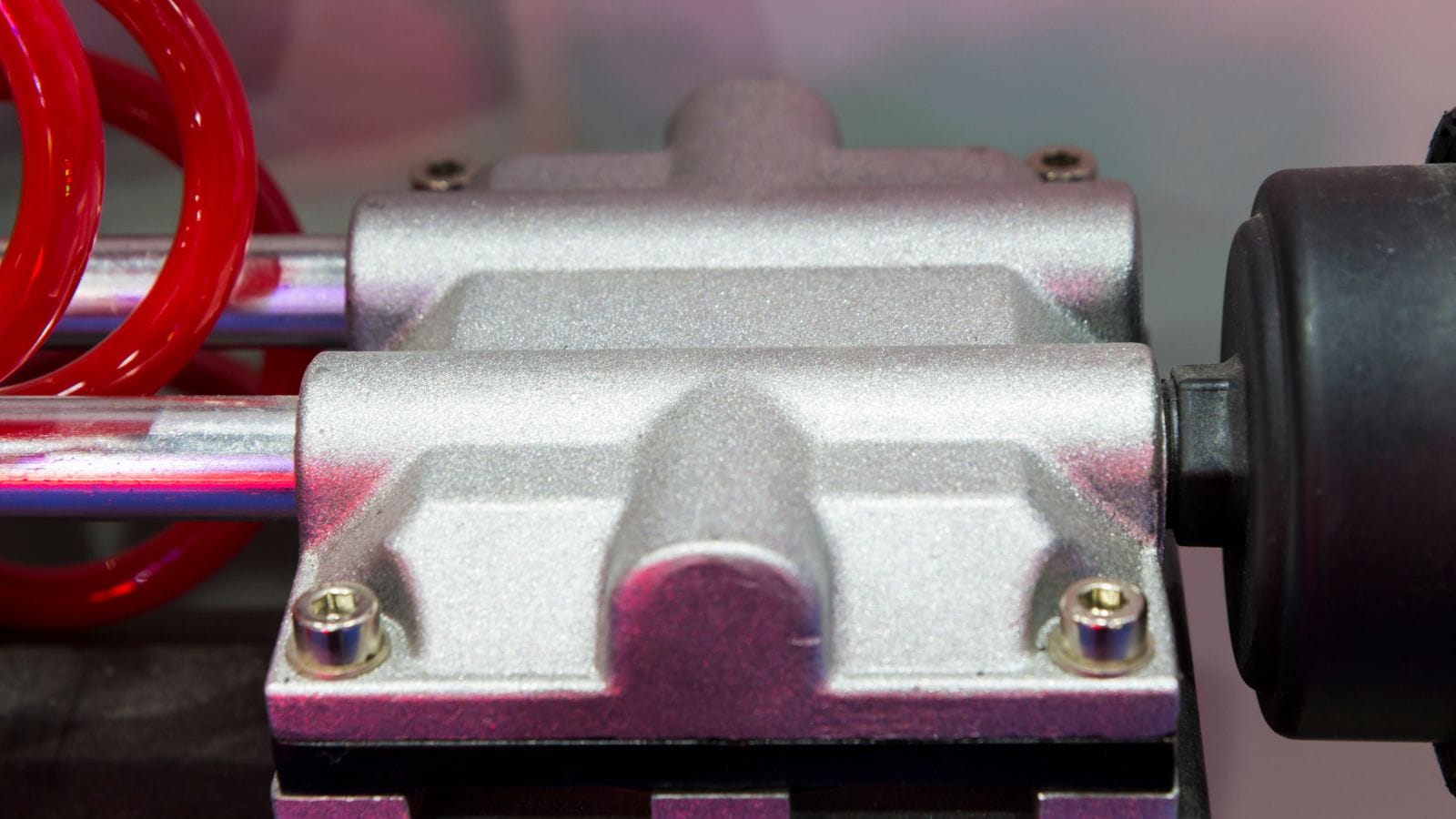
Aluminum gravity casting is one of the most common gravity casting techniques for practical reasons: low density, good fluidity, reasonable thermal conductivity, and strong post-casting mechanical properties.
They also respond well to heat treatment, which makes them useful for structural and powertrain applications.
Common gravity die casting aluminum alloys include the following:
Heat treatment, specifically the T6 cycle of solution heat treatment followed by artificial aging, is available to several of these alloys and significantly raises yield strength and hardness compared to as-cast conditions.
Zinc and Zamak Grades for Precision Components
Zinc alloys, including the Zamak family, offer a low melting point and excellent fluidity that allows them to fill fine details precisely. Zamak 3 is the most common grade, offering a good balance of strength, ductility, and dimensional stability.
Zinc castings hold tight tolerances and produce a smooth natural surface finish, which reduces post-processing for decorative and precision hardware. Their electrical conductivity and ease of plating also make them useful in electronics and connector housings.
The trade-off is density. Zinc is significantly heavier than aluminum, which limits its use in weight-sensitive applications.
Magnesium Alloys for Specialized Requirements
Magnesium alloys such as AZ91D and AM60B offer the lowest density among structural casting materials. AM50 provides good energy absorption for crash-relevant automotive parts.
Where weight reduction is a hard requirement, magnesium gravity casting delivers strength-to-weight ratios that aluminum cannot match.
Advantages, Limits, And Quality Outcomes
Gravity die casting benefits a production program with its unique advantages but is also bounded by its limitations. Understanding those trade-offs clearly, particularly around tooling cost, production volume, and casting quality, is what separates a good sourcing decision from an expensive one.
Why Reusable Dies Improve Repeatability
Gravity die casting is a permanent mold casting process, and the same steel die is used for thousands of pours. Cavity geometry stays fixed, which means dimensional accuracy and surface finish remain consistent from the first casting to the ten-thousandth.
Reusable dies also allow the die design to be optimized over time. Cooling channel placement, gate geometry, and venting can be refined based on first article inspection (FAI) data, improving yield without rebuilding tooling from scratch.
Low gas porosity is another structural benefit. Because gravity fill is slower and less turbulent than high-pressure injection, the metal flows into the cavity with less air entrapment. Controlled directional solidification then produces a denser microstructure, which supports heat treatment and improves fatigue performance in service.
Where the Process Falls Short
Tooling investment is the most significant barrier to entry. Gravity die casting dies are machined from tool steel and cost more to produce than sand casting patterns. For low-volume programs, the tooling cost per part stays high and the process loses its economic advantage.
Die design for gravity casting also limits geometric complexity. Undercuts and re-entrant features require sand cores or collapsible die sections, which add cost and cycle time. Parts with deep internal passages or extreme geometric complexity may be better suited to investment casting or low pressure die casting.
Production rates are also slower than high-pressure die casting. Gravity fill takes longer than pressure injection, which limits output per machine shift.
Quality Control Factors That Matter Most
Dimensional accuracy in gravity die casting depends on die steel quality, consistent die temperature management, and stable pouring practice. Variation in any of these introduces dimensional drift across a production run.
Internal quality inspection, specifically X-ray examination to detect shrinkage voids and CMM verification of critical dimensions, should be part of any supplier’s standard process. Full-size inspection reports after tooling trials help confirm that the die is producing parts to specification before volume production begins.
Surface finish is directly affected by die coating condition and die temperature. As coatings wear or die temperature drifts, surface quality degrades. Regular maintenance schedules and process monitoring are the practical controls that prevent this.
Typical Gravity Die Casting Products
Gravity die casting applications span a wide range of part types, sizes, and alloy requirements. What connects them is a consistent need for dimensional accuracy, mechanical integrity, and a surface quality that limits post-processing cost.
Automotive and Powertrain Parts
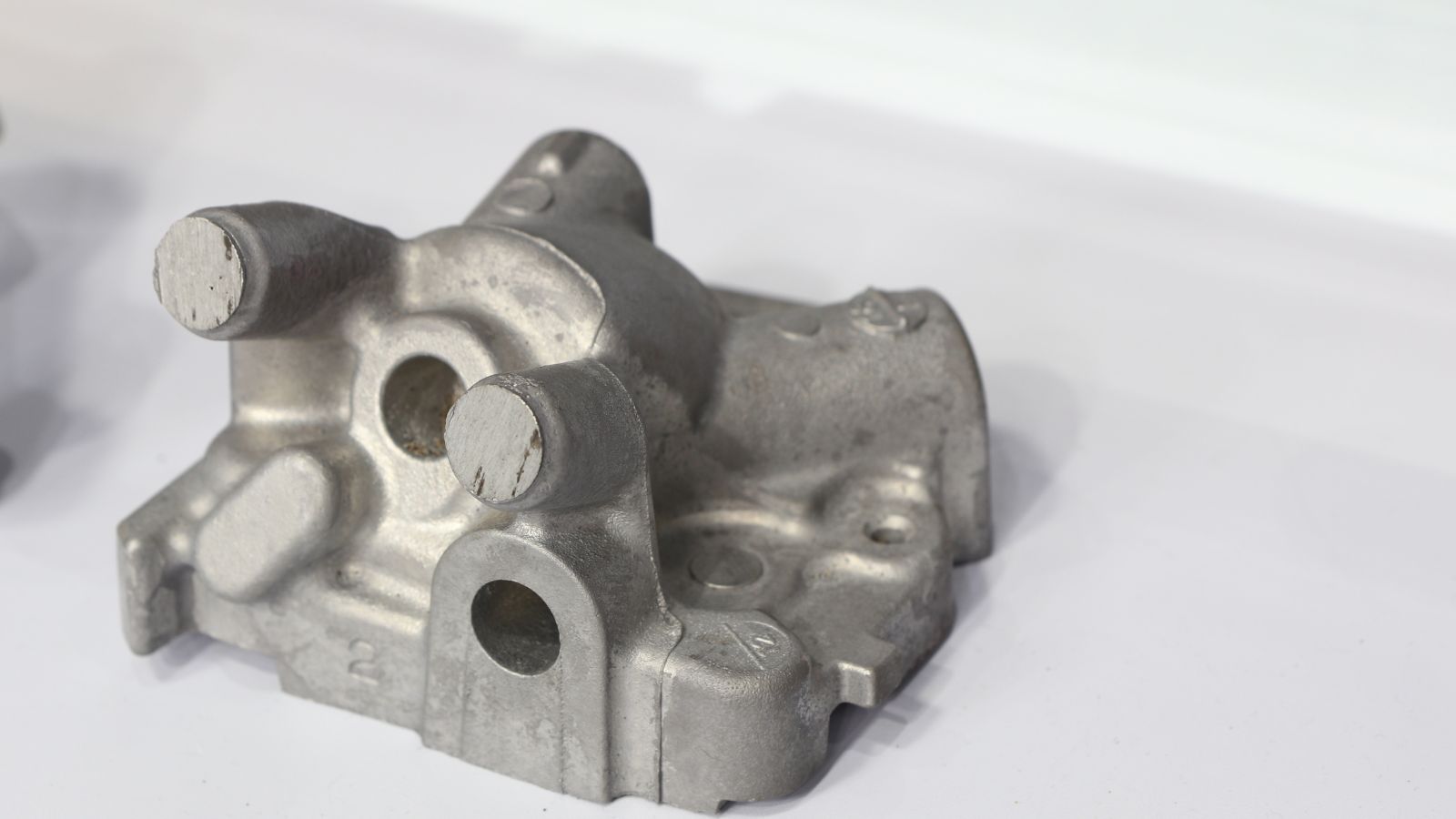
Gravity die casting is extensively used in the automotive sector due to its ability to produce high-integrity aluminum components that withstand extreme thermal and mechanical loads. It is mainly used for the manufacturing of:
- Cylinder heads
- Engine blocks
- Pistons
- Gearbox housings
- Suspension components
- Brake calipers
Electronics, Lighting, and Thermal Components
Aluminum gravity die casting is preferred for electronics, lighting, and thermal management components production because of aluminum’s excellent thermal conductivity and the process’s ability to produce dimensionally stable, ready-to-use housings. Here are some examples:
- Electronic enclosures
- Heat sinks
- LED light housings
- Chassis for telecommunications and industrial electronics
Industrial Equipment and Fluid Handling Parts
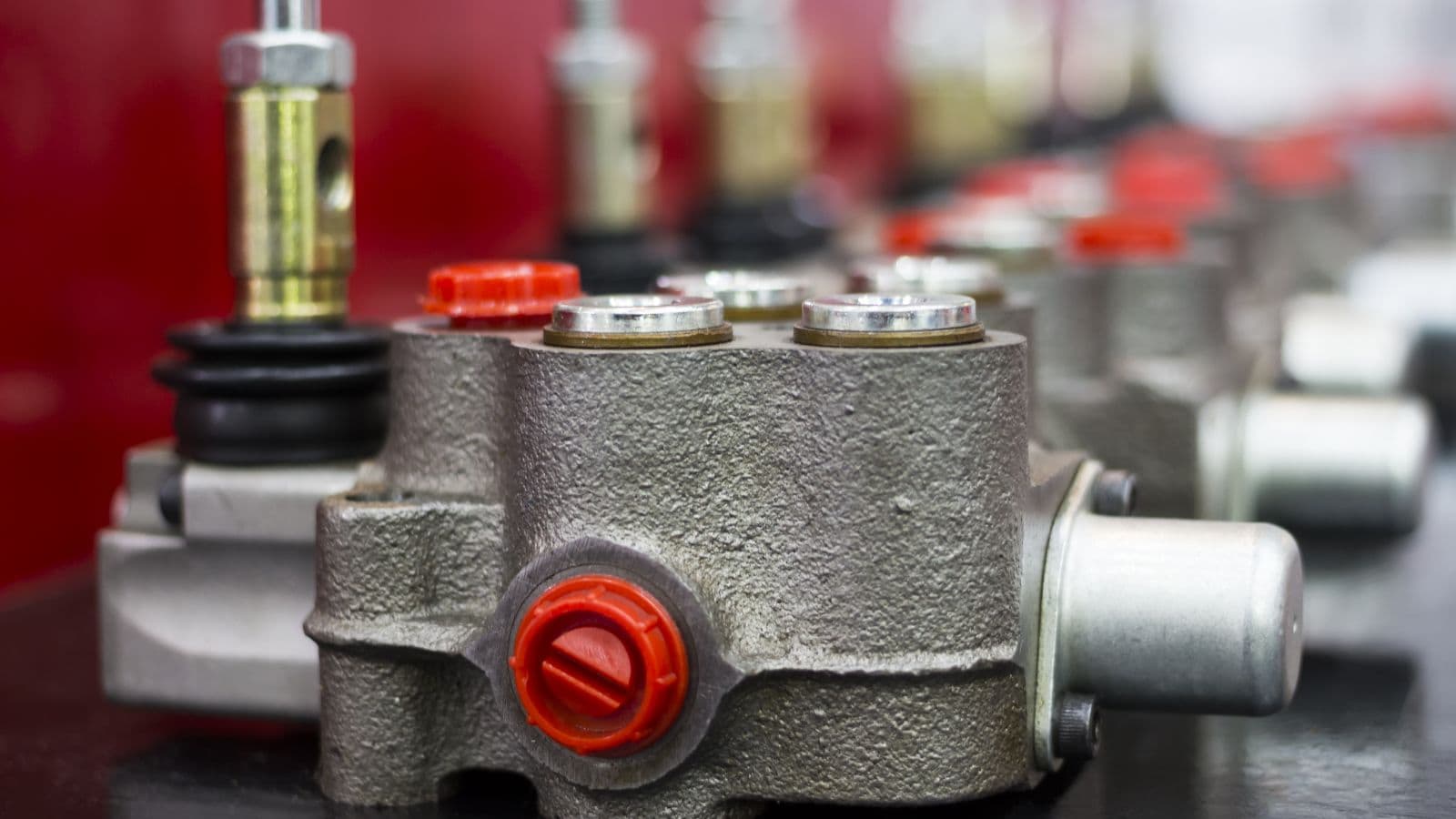
Gravity die casting is widely adopted for industrial equipment and fluid handling parts, particularly where pressure tightness, corrosion resistance, and complex internal geometries are critical to system performance. These gravity die casting products include:
- Valve bodies
- Pump housings
- Manifolds
Calculating the Gravity Die Casting Cost
Gravity die casting cost is the sum of tooling investment, per-part production cost, inspection overhead, and downstream finishing and machining, all spread across the production volume. Understanding each cost driver helps sourcing managers and engineers negotiate better and avoid surprises after tooling is committed.
-
Tooling investment is the largest upfront cost and the one most affected by part complexity. A simple two-piece die for a bracket costs far less than a multi-cavity die with sand cores for a valve body or cylinder head. Die steel grade, die size, number of cavities, and machining time all influence this cost.
-
Per-part production cost depends on cycle time, alloy price, scrap rate, and labor. Alloy cost fluctuates with commodity markets and has a direct impact on part price for heavy or thick-walled castings. Scrap rate is driven by mold design quality, process control, and die condition over time.
-
CNC machining cost rises with the number of tight-tolerance features, required tolerances, and fixturing complexity. Parts that need multiple machining steps or precision locating surfaces cost more to finish.
-
Surface finishing cost varies by process type, coverage area, and batch size. Powder coating, anodizing, painting, and similar treatments each add time and labor depending on the part’s final requirement.
-
Inspection cost depends on the scope of first article inspection, in-process checks, and final inspection. X-ray testing, CMM verification, and dimensional reports add cost but help reduce quality risk before volume production.
When an End-to-End Manufacturing Partner Adds Value
For OEM and ODM buyers working with multiple suppliers, consolidating die design, casting, machining, inspection, and finishing under one roof can reduce coordination effort and shorten lead times. It also makes communication easier because one team is responsible for the full process, from tooling development to final delivery.
A supplier with in-house mold flow simulation can identify fill issues before tooling is committed, helping avoid costly die changes after first article inspection. If the same supplier also has CMM and X-ray inspection capabilities, along with in-house CNC machining and finishing, it can provide dimensional and internal quality reports much faster than a setup that depends on third-party labs.
The main value of an end-to-end mold and die casting parts manufacturer is not just lower unit cost. It is stronger engineering continuity, clearer accountability, and faster problem-solving when issues arise during production.