


Choosing between die casting and forging shapes the strength, cost, and performance of a metal part. Each process forms metal in a different way, and that difference affects everything from internal structure to surface detail. A clear comparison of the two manufacturing methods helps you select the right method for better design decisions and more reliable products.
Fundamental Differences Between Die Casting and Forging
Die casting and forging shape metal in very different ways. One uses molten metal in a mold, while the other reshapes solid metal with force. These differences between forging and casting affect strength, design limits, cost, and common uses.
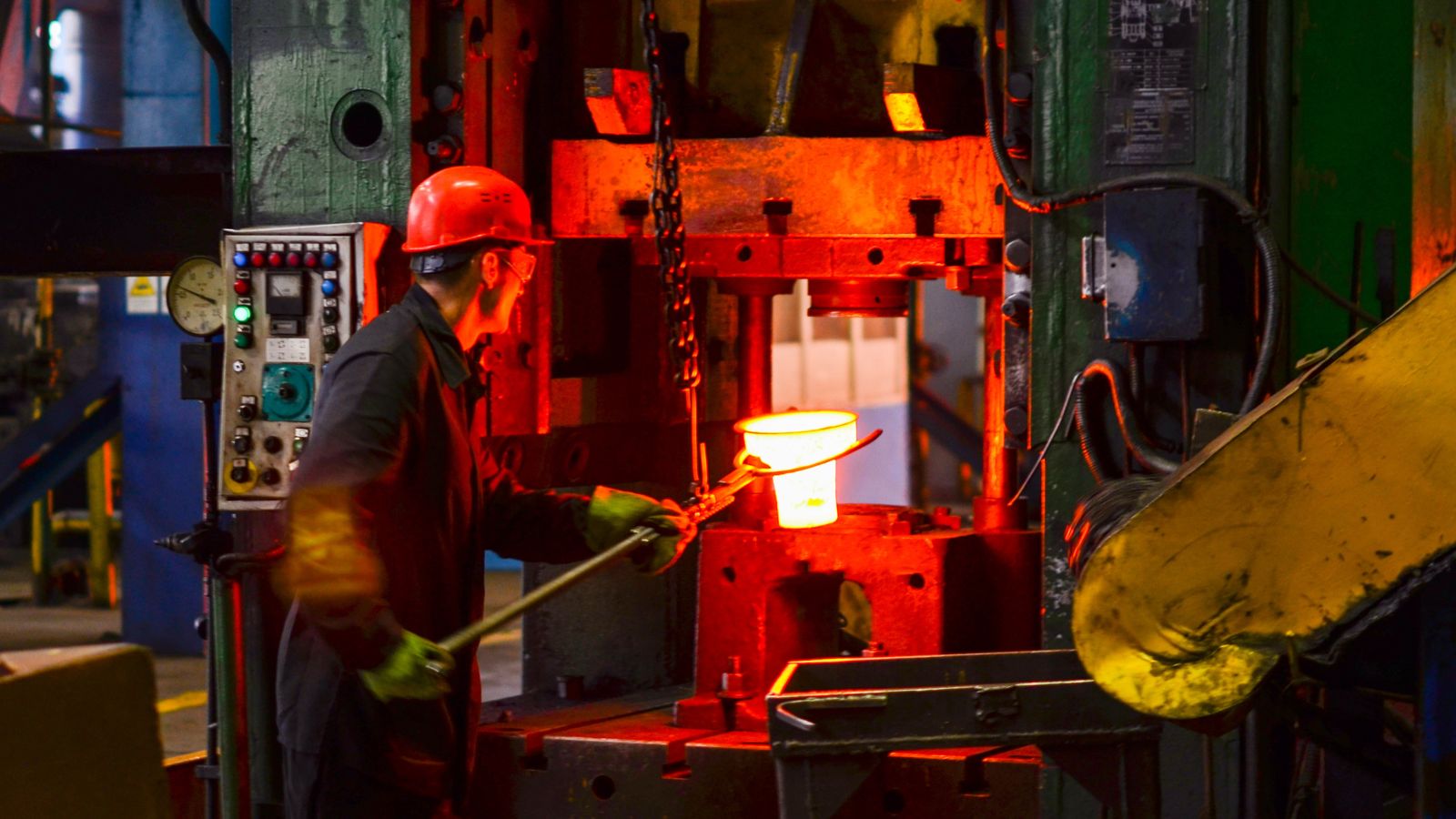
State of Material: Molten Metal vs Solid Metal
Die casting is a metal casting process. It forces molten metal under high pressure into a hardened steel die. The liquid metal fills the cavity, cools, and solidifies into the final shape.
Comparatively, forging is a metal forging process. It shapes solid metal using compressive force from hammers or presses. The metal does not melt. Instead, heat softens it enough to deform without breaking.
Typical Applications by Method
Manufacturers choose die casting when they need high production volume and complex shapes. It works well for aluminum, zinc, and magnesium parts.
Common die casting applications include:
- Automotive housings and brackets
- Gearbox and motor covers
- Heat sinks and electronic enclosures
- Consumer product frames
These parts often require tight tolerances and smooth surface finishes with minimal machining.
They select forging when mechanical strength and durability matter most. Forged components handle heavy loads and repeated stress.
Typical forging applications include:
- Engine crankshafts and connecting rods
- Gears and shafts
- Hand tools and hardware
- Aerospace structural parts
In these cases, the metal forging process provides the structural integrity needed for demanding service conditions.
Structural Integrity and Mechanical Properties
Forged parts often show better grain structure, higher tensile strength, yield strength, and toughness than die cast parts made from the same alloy. Also, the compressive force also reduces internal voids and limits large defects.
Die casting forms parts by injecting molten metal into a steel mold under pressure. It produces good dimensional accuracy and consistent surface finish. However, rapid filling can trap air and create internal porosity.
Such porosity can lower mechanical properties and reduce ultimate tensile strength. While modern controls and vacuum systems can significantly reduce casting defects, die cast parts usually do not match the peak strength and toughness of forged components.
Precision, Surface Finish, and Design Complexity
Die casting and forging differ in how closely they hold dimensions, how smooth the surface appears, and how much design freedom they allow. These factors affect machining time, tooling cost, and part performance.
Dimensional Consistency
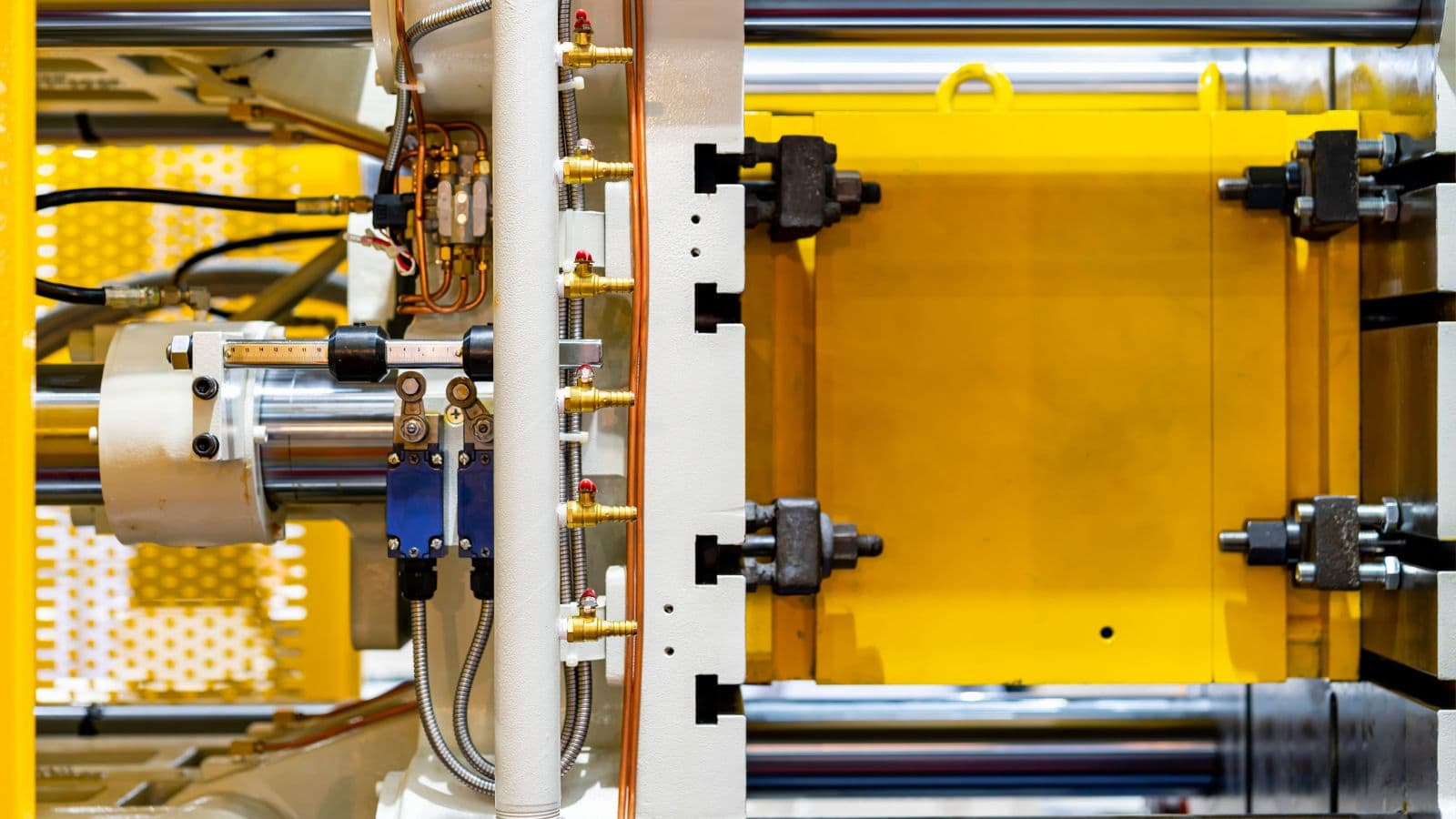
The automated mechanism of die casting and rigid die design supports tight dimensional accuracy in high-volume runs. Manufacturers often use die casting for small to medium parts that need repeatable measurements. Once the die is set and tuned, it can produce thousands of parts with similar dimensions.
Meanwhile, closed die forging can achieve good dimensional consistency, especially for near-net-shape parts. However, metal flow and die wear can cause slight variation, so manufacturers often add machining steps to meet final tolerances.
In many cases, forging requires more post-processing than die casting to reach exact dimensions, especially for complex parts.
Surface Finish Quality
Die casting often delivers a smooth surface finish straight out of the mold. Because the molten metal fills fine details in the die cavity under pressure, which allows sharp edges and clean surfaces.
This smooth finish reduces the need for heavy machining. Manufacturers may still trim flash, drill holes, or apply coatings, but they often avoid large material removal steps. That lowers finishing time for many casting applications.
In contrast, forging creates parts through force rather than flow, so the process can leave scale, die marks, or minor surface irregularities. As a result, forged parts often need machining, grinding, or blasting to improve appearance and meet surface standards.
Forging can improve material density and internal structure, but it rarely matches the as-cast surface detail of high-pressure die casting.
Complex Geometries and Internal Features
Die casting excels at high shape complexity. Engineers can design thin walls, ribs, bosses, and detailed outer surfaces into a single part. The process also allows certain internal features, such as channels or cavities, when the die includes cores or slides.
Forging works best with simpler external shapes. While closed-die forging can create moderate detail, solid metal resists flowing into very thin sections or deep internal cavities.
If a design requires intricate internal passages or sharp detail, manufacturers often choose die casting. If it requires high strength with simpler geometry, they often choose forging.
Production Volume, Cost, and Efficiency Considerations
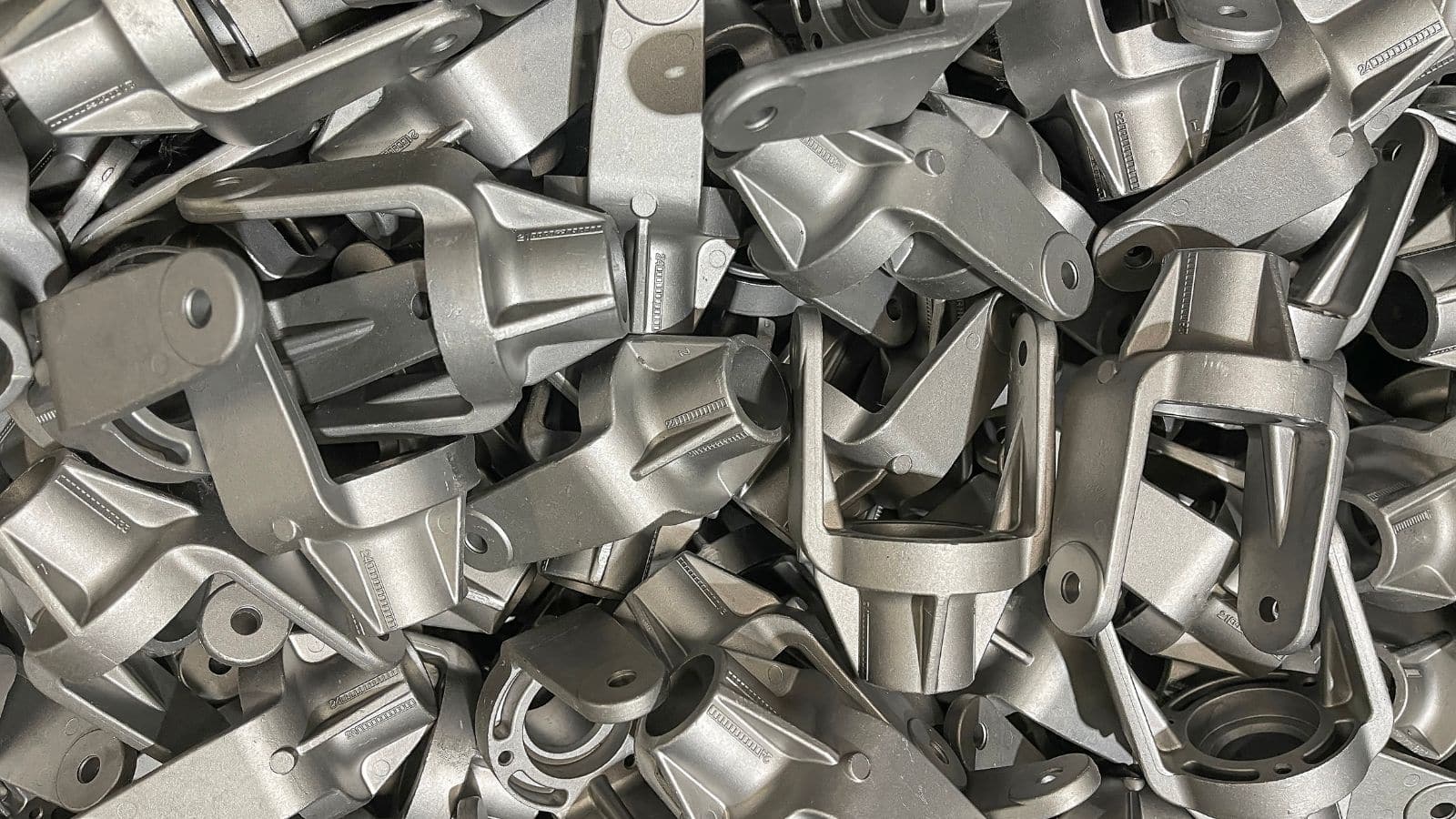
Production volume is the primary driver of tooling cost, per-part expenses, and long-term cost efficiency in industrial manufacturing.
Die casting and forging both require substantial upfront tooling investments that scale with part complexity, they are largely impractical for low-volume runs. However, once the initial investment is justified, both manufacturing processes deliver exceptional consistency and scale efficiently through automation.
Die casting achieves faster cycle times, making it highly effective for the rapid production of smaller, dimensionally stable components. In contrast, forged components frequently require secondary machining or trimming, which can impact overall production speed and processing times.
The financial dynamics shift predictably as batch sizes increase:
- Low Volume: Both processes suffer from high per-unit costs due to large, unamortized tooling expenses.
- Medium Volume: The cost per part drops significantly as the initial tooling investment is efficiently distributed across larger manufacturing batches.
- High Volume: Maximum economic efficiency is achieved for both methods. Die casting capitalizes on rapid, labor-saving cycle times, while forging offers long-term lifecycle savings by producing highly durable parts that reduce future warranty claims.
Forging vs Casting: The Selection Criteria
Engineers choose between these metalworking processes by weighing load demands, material limits, part geometry, and total cost. Each factor directly affects strength, durability, tooling expense, and production speed.
- Step 1: Evaluate Mechanical Demands: Choose forging for high-stress, safety-critical parts (e.g., aerospace, connecting rods) because compressing solid metal yields superior tensile strength and durability. Opt for die casting if moderate strength is acceptable, as the rapid cooling of its molten process can introduce microscopic, strength-reducing pores.
- Step 2: Assess Design Complexity: Select die casting for highly intricate designs requiring thin walls, internal cavities, or precise features in a single production shot. Use forging for simpler, bulkier shapes, keeping in mind that solid metal cannot flow into complex molds without extensive secondary shaping.
- Step 3: Analyze Production Economics: Both methods require significant upfront tooling costs that demand high production volumes to justify. Die casting offsets its high die costs by producing near-net-shape parts with extremely fast cycle times. Forging generally requires additional, costly CNC machining to reach final tight tolerances.
Summary
When deciding between die casting and forging, you should always choose the one that fits for your specific part.
Choose die casting if you need complex shapes, tight tolerances, and smooth surfaces at high production volumes, and your application can work with moderate mechanical properties.
Choose forging if your part must withstand heavy loads, repeated stress, or safety-critical conditions, and you’re willing to invest in additional machining for final dimensions.
Both require significant upfront tooling costs, making them practical only for high-volume production. Let your part’s function decide: intricate and cosmetic go to die casting; strong and structural go to forging.