


If you want strong metal parts with tight shape control and fewer defects, then squeeze casting is one of your prime options, as it resembles die casting and forging to improve quality for dense parts with superior mechanical properties compared to conventional casting products.
This article will not only cover how different squeeze casting types work and which metals fit the process, but also compare it with other casting methods. Read more to learn where and when it fits your projects best!
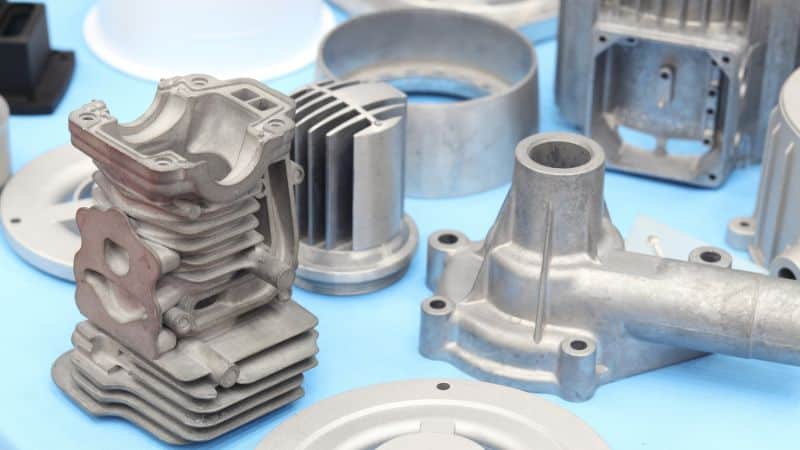
Types of Squeeze Casting
Squeeze casting, also known as liquid metal forging, follows the general rules of casting: solidify molten materials in a mold, and eject it after cooling. But the special feature of this die casting technique is that it applies pressure to molten metal as it cools to improve density and strength. The two main approaches, direct squeeze casting and indirect squeeze casting, differ in how the metal enters the die and how pressurization acts during solidification.
Direct Squeeze Casting
In direct squeeze casting, molten metal is poured directly into the die cavity. A punch then moves straight down and applies pressure as cooling begins.
The process is controlled with high hydraulic pressure, typically in the range of 50 to 150 MPa. The pressure stays active until the metal fully solidifies.
This method works well for thick parts and simple shapes. It yields high material integrity and very low porosity. However, complex internal features remain difficult to form.
Direct squeeze casting suits aluminum and magnesium parts used in structural roles. It is the better choice when strength and surface quality matter more than complex geometry.
Indirect Squeeze Casting
Indirect squeeze casting fills the die through a chamber, similar to high-pressure die casting. A plunger pushes the molten metal into the cavity, then continues pressurization during cooling.
Higher pressure can be used than in direct casting. This allows thinner walls and more detailed shapes. The metal flow also improves filling of narrow sections.
Indirect casting supports both vertical and horizontal machines. It is often selected for parts with complex geometry and tighter tolerances.
Compared to direct squeeze casting, this method needs more tooling and control. In return, it offers greater design freedom and consistent mechanical properties.
Squeeze Casting Process
Preparation and Melting
The process starts by selecting a clean metal alloy and preparing the dies. The die is heated to a set temperature to reduce thermal shock and improve metal flow. Proper die temperature also supports even filling of the die cavity.
The metal is melted in a controlled furnace until it reaches the correct pouring range. The molten metal must stay free of gas and oxide buildup. The surface is skimmed and holding time is managed to protect quality.
Key preparation steps include:
- Preheating dies and tooling
- Controlling melting temperature
- Measuring the correct melt volume
These steps set the base for stable casting results.
Pouring and Pressurization
The molten metal is poured directly into the open die cavity using gravity. This step differs from high-pressure casting methods because the metal flows at low speed. Low turbulence helps reduce trapped air.
After pouring, the die is closed and the hydraulic press is engaged. The press applies high pressure through a punch or squeeze pins. Pressure begins as the metal starts to cool.
Pressurization serves several purposes:
- Forces metal into thin sections
- Feeds shrinkage during cooling
- Improves contact with die surfaces
Pressure is maintained until solidification is nearly complete.
Solidification and Ejection
During the solidification process, pressure keeps the metal dense and fully fed. The heated die pulls heat away at a controlled rate. This rapid heat transfer creates a fine grain structure.
Pressure is held until the casting reaches sufficient strength. Releasing pressure too early can cause internal voids or surface defects. Timing plays a critical role.
Once solid, the die is opened and ejection begins. Ejector pins push the part out of the die cavity without damage. The part is inspected and excess metal is trimmed as needed. This stage completes a cycle that blends casting and forging into one process.
Materials Used in squeeze casting
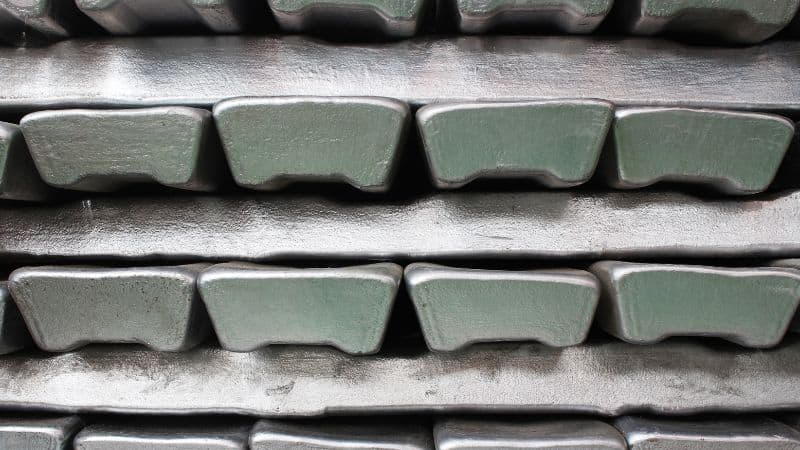
Aluminum and Its Alloys
Aluminum and aluminum alloys are most often used in squeeze casting. They offer high strength-to-weight ratios, good corrosion resistance, and strong heat transfer.
Common grades include Al-Si and Al-Mg alloys. These alloys fill the die well and respond well to pressure, which lowers porosity. Heat treatments can also be applied to improve strength and fatigue life.
Automotive wheels, engine blocks, and structural housings often use aluminum alloys. When tight tolerances and low machining effort are required, aluminum remains the first choice.
Magnesium and Magnesium Alloys
Magnesium and magnesium alloys are selected when weight reduction matters most. Magnesium weighs about one-third less than aluminum, which is beneficial for automotive and aerospace parts.
Squeeze casting improves the performance of magnesium alloys by reducing shrinkage and gas defects. This is particularly important because magnesium reacts quickly during solidification.
Magnesium alloy parts are often found in steering components, seat frames, and electronic housings. Careful temperature control and die design help avoid oxidation and cracking during the process.
Properties and Benefits of Squeeze Casting
Mechanical Properties and Microstructure
The process yields improved mechanical properties because pressure forces molten metal to solidify evenly. This action refines the grain structure and creates a uniform microstructure.
A finer grain structure increases toughness and ductility. It also improves wear resistance, which helps parts handle repeated loads and friction. These traits are important for parts that face stress, heat, or motion.
Pressure during solidification limits weak zones caused by uneven cooling. This results in more consistent strength across the entire part, not just in thick areas. This consistency supports reliable performance in structural and load-bearing components.
Key mechanical gains include:
- Higher tensile strength
- Better fatigue life
- Improved ductility and toughness
Porosity and Surface Finish
Squeeze casting produces low porosity because pressure feeds molten metal into shrinking areas as it cools. This reduces shrinkage porosity, which often weakens parts made with other casting methods.
Low porosity improves strength and supports heat treatment and welding. It also lowers the risk of leaks in pressure-tight parts. The process avoids trapped gas defects that commonly affect high-speed die casting.
The process also improves surface finish. The metal stays in close contact with the die, which creates a smooth and even surface texture. This results in fewer defects such as cold laps, flow lines, or surface breaks.
Better surface quality reduces the need for extra machining. This saves time and lowers finishing costs.
Dimensional Accuracy and Density
High dimensional accuracy is achieved because the metal solidifies under controlled pressure. The die stays fully filled during cooling, which limits distortion and uneven shrinkage.
High pressure produces high-density parts with minimal internal voids. Dense material improves strength and supports consistent performance under load. It also helps parts meet tight tolerance requirements.
Near-net-shape capability allows for a reduction in secondary machining. Features such as ribs, bosses, and thick sections form with better definition.
Dimensional benefits include:
- Stable part geometry
- Tight tolerances
- Reduced variation between castings
Comparison With HPDC Casting and Forging Methods
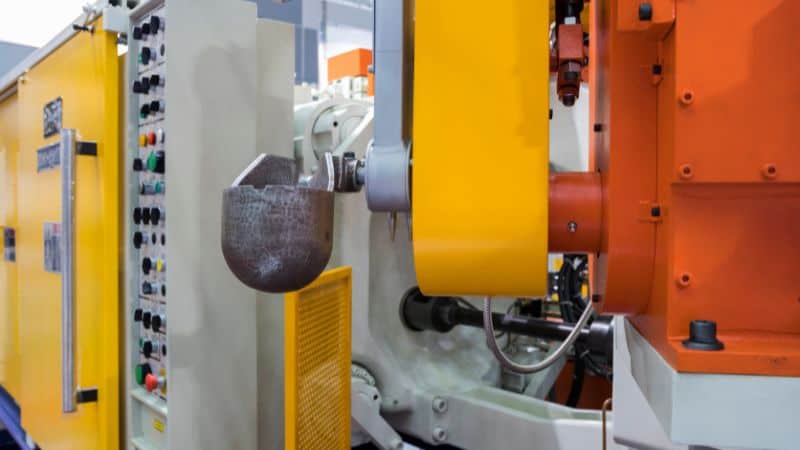
High Pressure Die Casting
High-pressure die casting (HPDC) is built for speed. It forces molten metal into a mold incredibly fast, making millions of complex, thin-walled parts—like electronics housings—quickly and precisely.
However, that ability for mass production creates a trade-off. The turbulent flow traps tiny air pockets inside the part, making it porous. This porosity means HPDC parts are weaker, more brittle, and usually cannot be heat-treated.
Squeeze casting is built for strength. It fills the mold slowly to avoid trapping air and then applies crushing pressure while the metal solidifies. This makes a part that is nearly solid, dense, and strong—like a forging. This density allows it to be heat-treated for even greater performance.
Conventional Forging
The forging process shapes solid or semi-solid metal using compressive force. This produces excellent strength and fatigue resistance because the metal grain structure is made to follow the part’s contours.
In contrast, squeeze casting begins with molten metal, not a solid billet. It produces near-net shapes with less material waste. Complex geometries are easier to achieve without requiring heavy machining.
Forging typically involves higher costs for tooling and setup, and it places greater limitations on part geometry. Squeeze casting offers a balance between the excellent mechanical properties approaching those of forging and the geometric flexibility of casting. This is particularly advantageous for aluminum parts that require both high structural integrity and detailed features.
Applications of Squeeze Casting
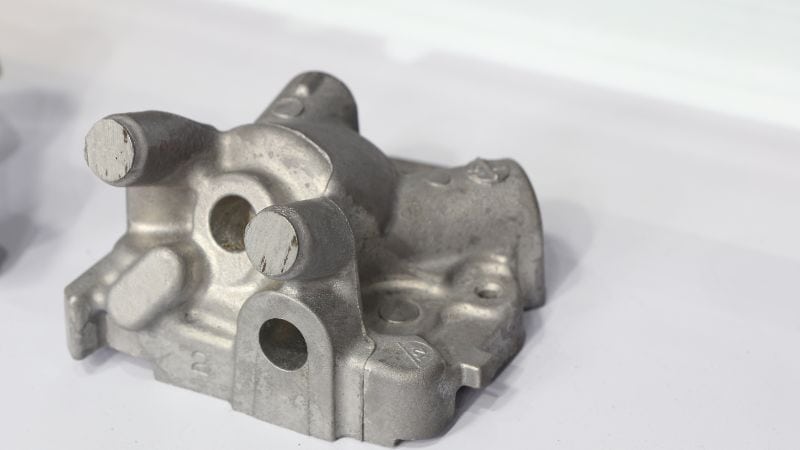
- Automotive Components: Used for critical, high-stress parts such as steering knuckles, pistons, engine blocks, and structural housings that benefit from high fatigue strength, heat resistance, and dense microstructure.
- Aerospace and Defense Systems: Essential for manufacturing lightweight yet high-strength structural components, housings, and specialized parts like mortar shells, where reliability, repeatable performance, and strict adherence to safety standards are non-negotiable.
- Industrial Machinery and Hydraulics: Ideal for producing robust, complex parts like pump bodies, valve blocks, hydraulic components, and machine housings that require dimensional accuracy, pressure tightness, and long service life in demanding environments.
Die Casting Professionals at Your Service
Squeeze casting stands out as a transformative hybrid manufacturing process, merging the geometric freedom of casting with the integrity of forging.
Moldie, as an industrial veteran in die casting, can smoothly integrate such a strategy into the production process for better strength-to-weight ratios, reduced latent defects, and minimal secondary processing.
So do not hesitate and contact us today. Let Moldie provide you with our die casting excellence.
Frequently Asked Questions
What should I consider first when choosing between squeeze casting and other die casting methods?
The deciding factor is often part complexity and material yield. If the component has complex internal passages, thin walls integrated with thick sections, or detailed features that would require massive machining from a forging, squeeze casting is preferable. If the geometry is simpler but requires the absolute maximum grain flow and directional strength, forging remains superior. Material waste (less in squeeze casting) is another key consideration.
Can I use squeeze casting for high-volume, small components?
Typically, no. The process cycle is generally slower than high-pressure die casting (HPDC), making it less economical for very high volumes of small, thin-walled parts. Its advantage is best leveraged for larger, structurally significant components where its material properties justify the cycle time.
Is post-casting heat treatment a must for squeeze-cast parts?
It depends on the required specification. While the excellent integrity of squeeze cast parts allows for effective heat treatment without blistering, many applications still require a T5 or T6 temper to meet peak strength specifications, which necessitates a heat treatment cycle.